One of the most common questions carriers ask during UCR renewal is simple: Is my UCR power unit count based on trucks or trailers?
The general answer is that UCR registration is based on commercial motor vehicles, also commonly referred to as power units, not trailers. That distinction matters. UCR fees are based on fleet size brackets for motor carriers, motor private carriers, and freight forwarders that operate commercial motor vehicles. Counting trailers by mistake can place a carrier in the wrong UCR fee bracket, increase the cost of filing, create confusion in the company’s records, and raise questions later if the UCR registration does not match the company’s actual operation.
For owner-operators, small fleets, private carriers, brokers, and freight forwarders, UCR can already be confusing. Many companies are unsure whether UCR applies, whether they are interstate or intrastate, whether brokers need UCR, whether private carriers need UCR, whether UCR is annual, and how the UCR power unit count should be calculated. The power unit question is especially important during UCR renewal season because it directly affects the fee category.
What Is UCR?
UCR stands for Unified Carrier Registration. UCR is an annual registration requirement that applies to many businesses involved in interstate commerce, including motor carriers, motor private carriers, brokers, freight forwarders, and leasing companies. Many carriers think UCR is only for traditional trucking companies. That is not always correct. UCR can apply to a broader range of businesses, including private fleets and companies that only use commercial vehicles as part of another business.
A construction company, manufacturer, utility company, distributor, equipment company, landscaping company, or private fleet may still need to review UCR if it operates in interstate commerce or has commercial motor vehicle activity that falls under the program. Common UCR searches include:
- UCR
- UCR registration
- UCR filing
- UCR renewal
- Unified Carrier Registration
- File UCR online
- UCR registration online
- UCR renewal online
- 2026 UCR filing
- 2027 UCR filing
- UCR fees
- UCR filing deadline
- Who needs UCR
- Do private carriers need UCR
- Do brokers need UCR
- UCR for owner operators
- UCR for intrastate carriers
- UCR power unit count
- UCR interstate commerce
- UCR compliance
- UCR penalties
- UCR registration lookup
- UCR participating states
- UCR non-participating states
These searches often lead to the same practical question: what does the business need to file, and what number should it use?
Is UCR Based on Trucks or Trailers?
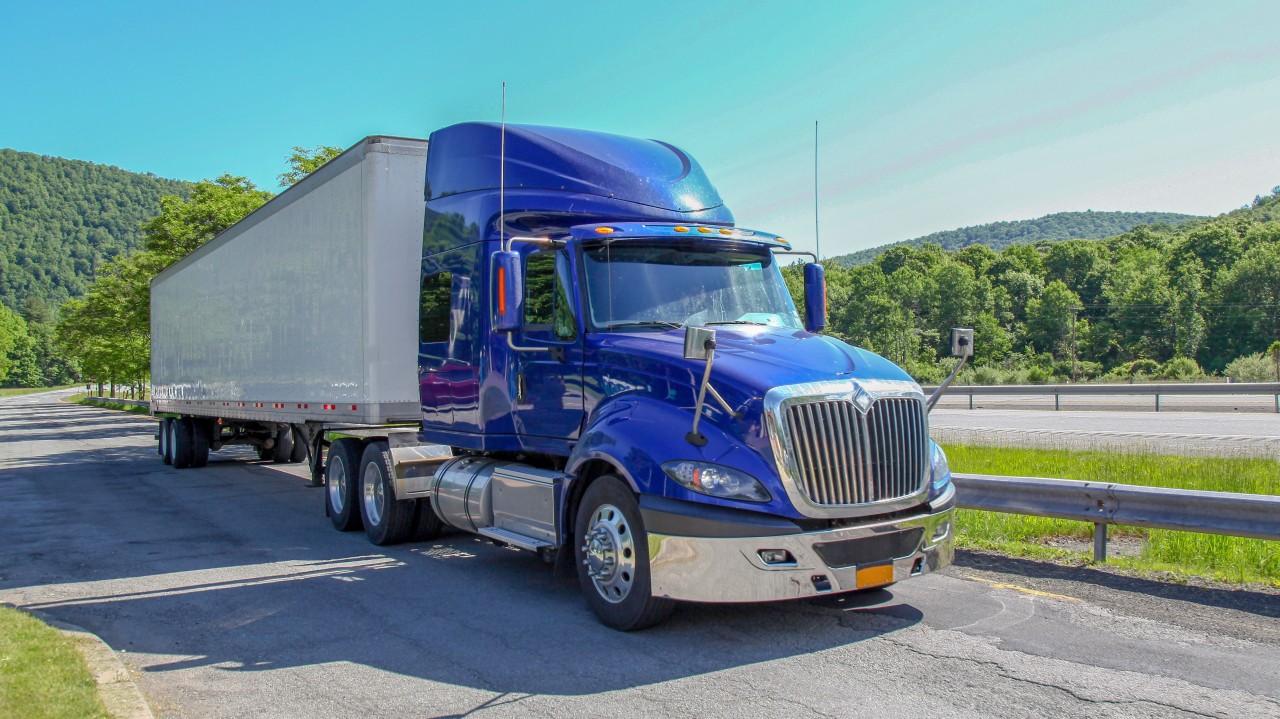
For most carriers, UCR is based on the number of commercial motor vehicles owned or operated. In practical terms, this usually means trucks, tractors, buses, and other power units. Trailers are generally not counted as power units for UCR fee bracket purposes. This is where many carriers make mistakes.
A carrier with two tractors and five trailers may think it has seven units. For UCR power unit count purposes, the carrier may only have two countable power units, assuming those tractors are the commercial motor vehicles being operated and the trailers are non-powered equipment. A carrier with one truck and one trailer may think the count is two. In many cases, the count is one power unit. A carrier with ten trucks and twenty trailers should not automatically count thirty. The UCR power unit count generally focuses on the commercial motor vehicles, not the trailers. This is why the term “power unit” is so important. A trailer does not have its own motive power. A tractor, truck, or bus does.
Why the Power Unit Count Matters
The UCR fee is based on brackets. A carrier with a small number of power units pays at a lower bracket than a carrier with a larger fleet. If a company accidentally counts trailers, it may file in a higher bracket than required.
The opposite problem can also occur. A carrier may undercount vehicles by leaving out trucks that should be included. That can create UCR compliance concerns. The goal is to use the correct count, not the lowest count. A UCR filing should reflect the actual commercial motor vehicle count under the applicable rules. Filing incorrectly can create avoidable issues later.
Where the UCR Count Comes From
The UCR count is generally based on one of two methods. The first method uses the number of commercial motor vehicles the company reported on its most recently filed MCS-150. The second method uses the total number of commercial motor vehicles owned or operated during the 12-month period ending June 30 immediately before the UCR registration year.
This is why UCR and the MCS-150 are connected. A carrier should not file UCR in isolation without checking whether the MCS-150, SAFER profile, power unit count, mileage, operation type, and public FMCSA profile are accurate. If the MCS-150 is outdated, the UCR filing may also become confusing.
Example: One Truck and One Trailer
A one-truck owner-operator may operate a tractor and pull a trailer. For UCR power unit count purposes, the tractor is generally the power unit. The trailer is generally not counted as a separate power unit. This matters because many owner-operators think in terms of total equipment. They may say, “I have a truck and trailer,” and assume that means two units.
For UCR, the better question is: how many commercial motor vehicles with motive power are owned or operated? In this example, the answer may be one.
Example: Two Tractors and Five Trailers
A small fleet owns two tractors and five trailers. For general business purposes, the company may describe itself as having seven pieces of equipment. For UCR fee bracket purposes, the company should review whether the two tractors are the countable commercial motor vehicles and whether the five trailers should be excluded.
In many cases, the UCR count is two power units, not seven total pieces of equipment. This can make a real difference in the UCR fee bracket.
Example: Private Fleet With Service Trucks
A private utility fleet owns several service trucks, bucket trucks, and support vehicles. Some vehicles may require a CDL. Some may not. Some may operate only locally. Some may cross state lines. Some may be registered under IRP. Some may be used to transport tools, equipment, or materials connected to interstate work. The company should review which vehicles count as commercial motor vehicles for UCR purposes.
This is where professional review matters. Private fleets often have mixed vehicle types, mixed use cases, and mixed state activity. The answer may not be as simple as counting every vehicle in the yard.
Example: Broker With No Trucks
A broker may need UCR even if it does not operate trucks. Brokers, freight forwarders, and leasing companies may be subject to UCR. However, if a broker does not operate commercial motor vehicles, the fee treatment is different from a motor carrier with power units.
This is why UCR questions should start with the entity type and actual operation. A broker should not assume it is exempt just because it does not own trucks. A motor carrier should not assume broker rules apply just because it also has brokerage activity. A company that has both motor carrier and broker operations may need a more careful review.
UCR and MCS-150 Power Unit Count
The MCS-150 and UCR often need to be reviewed together. The MCS-150 is used to update a company’s USDOT record. It may show power units, drivers, mileage, cargo classifications, company address, legal name, DBA, and operation type. This information may appear publicly through SAFER and other FMCSA systems. If the MCS-150 shows an outdated power unit count, the UCR filing may become more difficult to interpret. For example:
- The carrier sold trucks but never updated the MCS-150.
- The carrier bought trucks but never updated the MCS-150.
- The carrier stopped operating but did not deactivate the DOT number.
- The carrier filed UCR based on old data.
- The carrier counted trailers by mistake.
- The carrier changed from private carriage to for-hire operations.
- The carrier changed from intrastate to interstate operations.
- The carrier’s SAFER profile does not match its actual fleet.
These issues can create questions during UCR registration, broker onboarding, public record review, or compliance checks.
UCR and SAFER Profile Accuracy
SAFER displays public FMCSA information that may be reviewed by brokers, shippers, insurers, agencies, and compliance teams. If the SAFER profile shows an old MCS-150 date, outdated power unit count, wrong address, incorrect driver count, or inactive status, the carrier may face questions.
UCR registration is not the same as a SAFER update. Filing UCR does not automatically correct the MCS-150. Updating the MCS-150 does not automatically complete UCR. They are connected but separate. A carrier should review both before filing.
UCR and MOTUS
MOTUS is FMCSA’s newer registration system and account management environment. It affects how carriers manage federal registration access, authorized users, company official information, and registration actions. UCR itself is filed through the UCR system, but the data used to understand the carrier’s public profile may connect back to FMCSA registration records, MCS-150 data, SAFER, and MOTUS access. If a carrier needs to update its MCS-150 before or after UCR filing, MOTUS access may become important. A carrier should confirm:
- Who controls MOTUS access
- Who is listed as Company Official
- Which Login.gov email is tied to the company
- Whether authorized users are current
- Whether the MCS-150 data is accurate
- Whether SAFER reflects the actual operation
- Whether the UCR filing uses the correct power unit count
MOTUS, SAFER, MCS-150, and UCR all connect to the broader public compliance picture.
UCR for Owner-Operators
Owner-operators often have the most confusion around UCR. A one-truck business may need UCR if it operates in interstate commerce or otherwise falls under UCR requirements. The owner-operator may also need to review MCS-150, DOT number status, SAFER profile, drug and alcohol testing, Clearinghouse, Driver Qualification File, and MOTUS access. For owner-operators, the power unit question usually comes down to the truck or tractor. Common mistakes include:
- Counting the trailer as a power unit
- Filing in the wrong UCR fee bracket
- Missing UCR because the operator thinks one truck is too small to matter
- Confusing UCR with MCS-150
- Confusing UCR with IRP
- Confusing UCR with IFTA
- Failing to update the MCS-150 after buying or selling equipment
- Failing to review whether interstate commerce applies
An owner-operator should not wait until a roadside stop, broker issue, or renewal deadline to review UCR.
UCR for Private Carriers
Private carriers may also need UCR. A private carrier transports its own property or supports its own business rather than hauling for hire. That does not automatically remove UCR obligations. Private carriers involved in interstate commerce should review whether UCR applies. Examples may include:
- Construction companies
- Landscaping companies
- Manufacturers
- Retail distributors
- Food and beverage companies
- Utility companies
- Equipment rental companies
- Waste and recycling companies
- Agricultural businesses
- Energy companies
- Real estate developers
- Municipal contractors
These companies may operate trucks, tractors, service vehicles, or other commercial motor vehicles as part of their business. For UCR, the company should review whether the vehicles are countable commercial motor vehicles and whether trailers should be excluded from the power unit count.
UCR for Intrastate Carriers
Intrastate carriers often ask whether they need UCR. The answer depends on the operation and whether interstate commerce is involved. A carrier may operate only within one state but still be part of interstate commerce if the freight, goods, materials, or business activity has an interstate origin, destination, or commercial connection. This is where UCR for intrastate carriers can become confusing.
A company should not assume that staying inside state lines always means UCR does not apply. It should review the actual movement, cargo, customer, and business activity. A carrier should also review whether vehicles are registered under IRP or whether any freight or materials originated outside the state or are destined outside the state.
UCR Participating and Non-Participating States
Another source of confusion is UCR participating states and UCR non-participating states. UCR is a federal program administered through participating states, but businesses in non-participating states may still have UCR obligations if they are subject to the program.
A carrier should not assume that because its base state does not participate, it has no UCR filing requirement. This is especially important for carriers operating across state lines, private fleets with multistate activity, brokers, freight forwarders, and leasing companies.
UCR, IRP, and IFTA Are Different
UCR is often confused with IRP and IFTA. UCR is an annual registration requirement under the Unified Carrier Registration program. IRP relates to apportioned registration for vehicles operating in multiple jurisdictions. IFTA relates to fuel tax reporting. A carrier may need all three, some of the three, or only one depending on its operation.
- Filing UCR does not complete IRP.
- Filing IRP does not complete UCR.
- Filing IFTA does not complete UCR.
A carrier should review each requirement separately.
Common UCR Power Unit Count Mistakes
Common mistakes include:
- Counting trailers as power units
- Counting total equipment instead of commercial motor vehicles
- Using an outdated MCS-150 count
- Ignoring trucks added after the last MCS-150
- Failing to account for vehicles owned or operated during the relevant 12-month period
- Filing based on current yard count without reviewing the prior period
- Using the wrong UCR registration year
- Confusing 2026 UCR filing with 2027 UCR filing
- Filing as a broker when also operating motor vehicles
- Assuming private carriers do not need UCR
- Assuming intrastate operations are always exempt
- Ignoring IRP registration indicators
- Failing to keep proof of filing
- Failing to reconcile UCR with SAFER and MCS-150 records
Each mistake can create confusion later.
What Carriers Should Review Before Filing UCR
Before filing UCR, a carrier should review:
- Entity type
- USDOT number
- Operating authority, if applicable
- Whether the company is a motor carrier, motor private carrier, broker, freight forwarder, or leasing company
- Whether the company operates commercial motor vehicles
- Whether interstate commerce applies
- Most recent MCS-150
- SAFER profile
- Power unit count
- Trailer count, to avoid miscounting
- Vehicles owned or operated during the relevant 12-month period
- Vehicles listed under IRP
- Vehicle additions and dispositions
- UCR registration year
- UCR fees and fee bracket
- Prior UCR filings
- Whether the company is based in a participating or non-participating state
- Whether MCS-150, SAFER, or DOT record updates are needed
This review helps ensure the UCR filing is accurate and defensible.
How Vehicle Dispositions Affect UCR
Vehicle dispositions matter because the UCR count may look at vehicles owned or operated during a prior 12-month period ending June 30 before the registration year. If a carrier sold trucks, bought trucks, parked equipment, leased vehicles, or changed operations, the company should review whether those vehicles affect the count. A carrier should keep documentation of:
- Truck purchases
- Truck sales
- Lease agreements
- Vehicle dispositions
- IRP records
- Insurance schedules
- MCS-150 updates
- Fleet lists
- Dates vehicles entered or left service
This documentation can help support the UCR filing if questions arise.
Why the Wrong Count Can Cost Money
Using the wrong count can place the carrier in the wrong fee bracket. Counting trailers can lead to overpayment. Undercounting trucks can lead to underpayment and compliance risk. Using old data can create mismatch issues.
The right answer depends on the operation, the vehicles, the registration year, and whether the carrier uses the MCS-150 count or the owned-or-operated count for the applicable period. This is why UCR filing support can be helpful even when the form appears straightforward.
Why Professional Support Matters
UCR power unit count sounds simple until the carrier has mixed equipment, private fleet operations, brokers and motor carrier authority, intrastate questions, non-participating state issues, vehicle dispositions, outdated MCS-150 information, or SAFER inconsistencies. A professional compliance team can help review:
- Who needs UCR
- Whether the company is subject to UCR
- Which UCR registration year applies
- Which fee bracket applies
- Whether trailers should be excluded
- Whether the MCS-150 count is accurate
- Whether the alternative owned-or-operated count should be reviewed
- Whether interstate commerce applies
- Whether private carrier status changes the analysis
- Whether brokers or freight forwarders need filing
- Whether the public DOT record needs updating
The goal is not to file the cheapest way. The goal is to file correctly.
Dakota Group Can Help
Your UCR power unit count is generally based on commercial motor vehicles, not trailers. But the correct UCR filing can still require careful review of your operation, MCS-150, SAFER profile, DOT number, fleet changes, interstate activity, and UCR registration year.
Dakota Group helps motor carriers, owner-operators, private fleets, brokers, freight forwarders, and commercial vehicle businesses manage UCR registration, UCR filing, UCR renewal, UCR power unit count review, 2026 UCR filing, 2027 UCR filing, MCS-150 updates, SAFER profile review, MOTUS support, DOT activation, DOT deactivation, Drug and Alcohol Management, Clearinghouse support, Driver Qualification File review, and broader trucking compliance paperwork.
No AI chatbots. Talk to our team.
Dakota Group’s U.S.-based compliance specialists are available live Monday through Friday to help operators understand what applies, prepare the right paperwork, and reduce the risk of UCR penalties, filing errors, public record issues, and paused operations.
Follow Dakota Group for weekly DOT and FMCSA updates, and call (800) 500-9295 to work with our team.