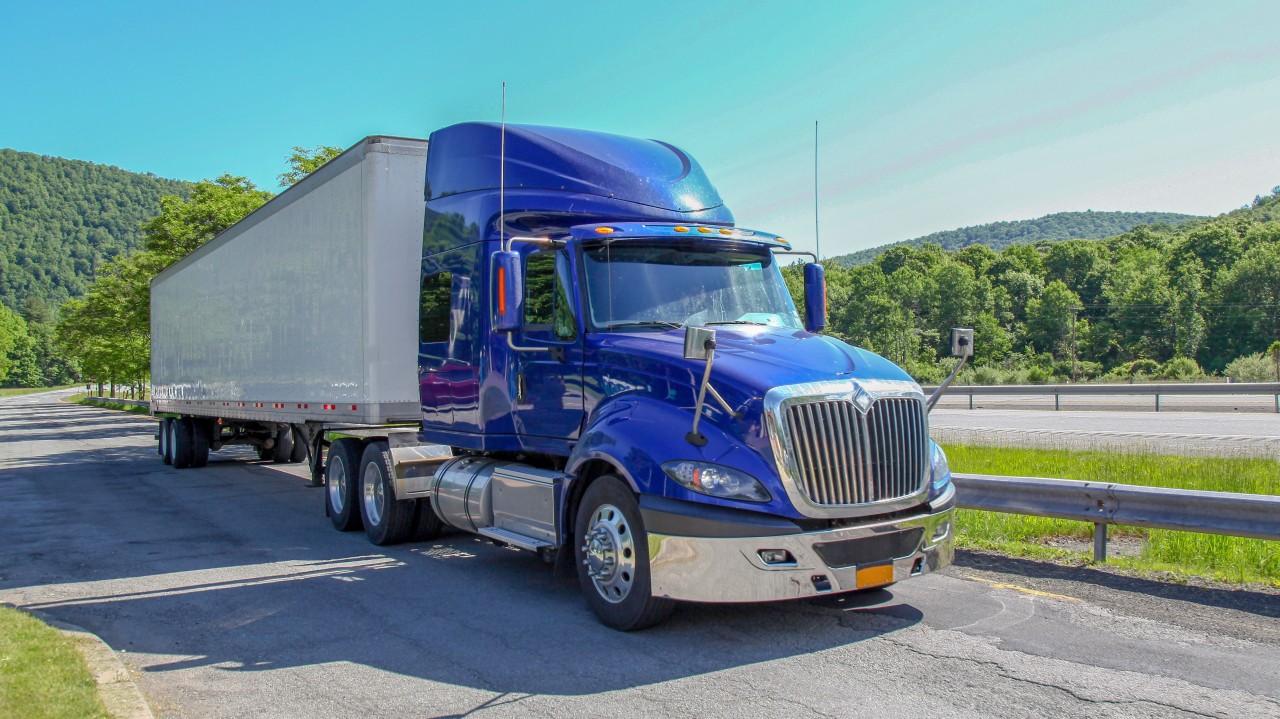
The U.S. Supreme Court’s decision in Montgomery v. Caribe Transport II, LLC may become one of the most important freight broker liability cases in recent trucking history.
The case involves Shawn Montgomery, a truck driver who was severely injured after his parked vehicle was struck by a tractor-trailer operated by a driver for Caribe Transport II, LLC. At the time of the accident, Caribe was transporting a load arranged by C.H. Robinson, one of the largest freight brokers in the United States.
Montgomery sued the driver, Caribe Transport, and C.H. Robinson. His claim against C.H. Robinson was based on negligent hiring. In plain English, Montgomery argued that C.H. Robinson knew, or should have known, that Caribe Transport presented safety concerns before selecting the carrier to haul the load.
C.H. Robinson argued that Montgomery’s claim was barred by federal law. Specifically, the company relied on the Federal Aviation Administration Authorization Act, commonly known as the FAAAA, which generally preempts certain state laws related to the prices, routes, and services of motor carriers, freight brokers, and transportation providers.
Montgomery argued that his claim fell within the FAAAA’s safety exception, which preserves a state’s safety regulatory authority “with respect to motor vehicles.” The Supreme Court sided with Montgomery on that issue. The Court held that a negligent-hiring claim against a freight broker may fall within the FAAAA’s safety exception because the selection of a motor carrier concerns the trucks that will actually transport the freight. As a result, Montgomery’s claim against C.H. Robinson can proceed. That is an important distinction. The Supreme Court did not decide that C.H. Robinson is liable. It did not decide that Montgomery wins on the merits. It was decided that C.H. Robinson cannot avoid the negligent-hiring claim solely by relying on FAAAA preemption.
Why This Case Matters
For years, freight brokers have argued that they are not the FMCSA and should not be treated as the primary safety regulator for motor carriers. The broker position has often been that if a motor carrier is authorized by FMCSA, properly insured, and legally permitted to operate, then the responsibility for determining whether that carrier may operate on the road belongs primarily to the federal regulatory system.
That argument has practical force. Freight brokers arrange transportation. They do not own the trucks. They do not employ the drivers. They do not perform roadside inspections. They are not the agency that grants operating authority.
But Montgomery changes the risk analysis.
- The Supreme Court’s decision means a broker may face state-law negligent-hiring claims when the broker allegedly selected a carrier with safety problems, poor compliance history, crash history, or other red flags that could make a serious accident foreseeable.
- In other words, FMCSA authorization may not be the end of the inquiry.
- A carrier being “active” or “authorized” may not, by itself, be enough to protect a broker from litigation risk if there were known or knowable safety issues at the time the carrier was selected.
The Industry Was Already Moving in This Direction
This decision did not happen in a vacuum. Since COVID, the trucking and logistics industry has been dealing with an increase in fraud, double-brokering, cargo theft, identity issues, unauthorized re-brokering, and uncertainty over who is actually hauling the freight.
For brokers and shippers, that created a major operational problem: it was no longer enough to simply book a carrier with an MC number, a certificate of insurance, and an available truck.
Third-party vetting platforms became more important. Brokers began relying more heavily on carrier history, VIN verification, trailer verification, driver validation, insurance checks, ELD and telematics connections, tracking visibility, fraud monitoring, and deeper review of safety and compliance records. Montgomery will likely accelerate that shift.
If freight brokers face increased litigation exposure for selecting unsafe carriers, then carrier vetting becomes more than a back-office compliance function. It becomes a legal risk-management requirement.
What This Could Mean for Smaller and Newer Carriers
This decision could make it harder for smaller and newer motor carriers to access freight, especially if they have limited operating history. Brokers are already cautious with new MC numbers, unclear ownership structures, inconsistent insurance records, weak inspection history, poor documentation, or carriers that cannot verify equipment and driver information quickly.
Montgomery may make brokers even more cautious. A broker arranging a load may make only a few hundred dollars in gross margin. If the load later results in a serious crash and the broker is accused of negligent carrier selection, the legal exposure could be enormous compared with the profit earned on the load and this economic mismatch matters.
When the upside on a load is relatively small, and the downside risk is potentially catastrophic, brokers will likely become more selective. They may prefer carriers with longer operating histories, stronger safety records, clean insurance, verified equipment, responsive dispatch, ELD visibility, and a proven record of safely picking up and delivering freight.
That does not mean newer carriers cannot compete. But it does mean they may need to work harder to prove they are legitimate, compliant, insured, trackable, and professionally operated.
What This Could Mean for Established Carriers
Established medium and large carriers may benefit from this decision. A carrier with multiple years of operating history, strong inspection results, clean insurance, reliable tracking, documented equipment, trained drivers, and a professional compliance program can now use those facts as a competitive advantage.
In a market where brokers are trying to reduce risk, safety, and compliance become sales tools. A carrier’s pitch to brokers should not only be: “We can move the load.” It should also be: “We are a lower-risk carrier.”
That means carriers should be prepared to show:
- Active operating authority
- Proper insurance
- Clean and accurate FMCSA records
- Updated MCS-150 information
- Accurate SAFER profile data
- Documented equipment
- Reliable ELD or tracking visibility
- Driver qualification discipline
- Drug and alcohol testing compliance
- On-time performance history
- Clear ownership and dispatch communication
Carriers that can provide this documentation quickly may have an advantage over carriers that cannot.
What This Could Mean for Freight Brokers
For freight brokers, the takeaway is straightforward: carrier selection needs to be documented, consistent, and defensible.
A broker should not assume that FMCSA authorization alone eliminates risk. The better approach is to build a clear carrier-vetting process and follow it.
That may include reviewing authority status, insurance, safety data, crash history, inspection history, out-of-service indicators, identity signals, equipment verification, fraud flags, and any other information reasonably available before tendering a load.
Just as important, brokers should document the process.If a claim is later filed, the question may not only be whether the carrier was authorized. The question may be whether the broker exercised reasonable care based on the information available at the time.That is where policies, procedures, checklists, audit trails, and consistent review standards matter.
What This Could Mean for Smaller Brokerages
This decision may also put pressure on smaller freight brokerages. Many small brokerages operate with lean teams, limited compliance infrastructure, and a few customer relationships. They may not have the internal legal, insurance, technology, and compliance resources needed to build and maintain a more rigorous carrier-vetting process.
If broker liability risk increases, smaller brokerages may face higher insurance costs, greater compliance costs, and more pressure to adopt third-party vetting tools.
Some may adapt. Others may consolidate, sell their book of business, or align with larger brokerages that can absorb the cost of additional vetting and legal risk.
This is similar to what has already happened in parts of the trucking industry: higher compliance expectations tend to favor companies with stronger systems, better documentation, and more operational maturity.
The Practical Compliance Lesson
The practical lesson from Montgomery is that carrier selection is no longer just a pricing and capacity decision. It is increasingly a safety, compliance, legal, and risk-management decision.
- For brokers, that means vetting procedures matter.
- For carriers, that means compliance records matter.
- For shippers, that means broker selection matters.
And for the broader trucking industry, this decision reinforces a trend that has been building for years: the companies that can prove compliance, safety, transparency, and accountability will have an advantage.
What Carriers Should Do Now
Motor carriers should treat their public compliance profile as part of their business development strategy.
That includes keeping FMCSA records accurate, filing MCS-150 updates when required, maintaining proper insurance, monitoring safety data, correcting outdated business information, ensuring drug and alcohol testing compliance, and making sure brokers can verify who they are doing business with.
A carrier with outdated FMCSA information, mismatched contact details, unclear ownership records, weak documentation, or poor responsiveness may create unnecessary concern for brokers. In a more cautious market, that can cost freight opportunities.
What Brokers Should Do Now
Freight brokers should review their carrier onboarding and carrier-selection procedures.
At a minimum, brokers should consider whether their process is consistent, documented, and designed to identify obvious red flags before a load is tendered.
This does not mean brokers become FMCSA. It does mean brokers should be able to show that they exercised reasonable care when selecting a carrier. The stronger the process, the stronger the defense.
Final Takeaways
Montgomery v. Caribe Transport is a major freight broker liability decision because it limits the ability of brokers to rely on FAAAA preemption as a complete shield against negligent-hiring claims involving motor carrier safety.
The case will now continue in the lower courts, and the ultimate liability questions remain unresolved, however the message to the industry is already clear.
- Carrier vetting, safety history, FMCSA records, insurance, equipment verification, and compliance documentation are becoming more important, not less.
- For carriers, this is a reason to clean up records and prove reliability.
- For brokers, this is a reason to strengthen vetting and documentation.
- For shippers, this is a reason to understand who is arranging freight and what standards they use.
The freight market has already been moving toward more verification and less tolerance for unknown risk. Montgomery may speed that process up.
Need help reviewing your USDOT registration, operating authority, FMCSA Portal access, or Motus readiness? Contact our team at FMCSA.com to speak with a compliance specialist today!
Thank you for reading. Click here to follow us on LinkedIn, and subscribe to our blog for new content created by logistics experts for logistics experts, created weekly.
Whether you need help understanding the new requirements, preparing your drivers, or managing your broader FMCSA compliance obligations, our team is here to help.
Need assistance today?
- Call (800) 500-9295 to speak with a compliance specialist directly to help you navigate your filings with confidence or
- Self-File at FMCSA.com
For more content and updates, follow us on Facebook
Frequently Asked Questions About Montgomery v. Caribe Transport and Freight Broker Liability
Montgomery v. Caribe Transport is a U.S. Supreme Court case that could have a lasting impact on freight broker liability and carrier selection practices. The case focuses on whether freight brokers can face state-law negligence claims for selecting an unsafe motor carrier, or whether those claims are prevented by federal law.
The Court ruled that the Federal Aviation Administration Authorization Act (FAAAA) does not automatically block these negligent hiring claims. The decision allows the lawsuit to continue, but it does not determine whether the broker is ultimately liable.
The decision changes how many people view freight broker risk. Instead of relying solely on a carrier’s active FMCSA authority, brokers may need to demonstrate that they exercised reasonable care when selecting a carrier.
As a result, carrier vetting, safety documentation, and compliance records may become even more important throughout the transportation industry.
The lawsuit arose from a 2017 crash involving a truck operated by Caribe Transport while hauling a load arranged by C.H. Robinson. Shawn Montgomery, who was seriously injured, sued the driver, the motor carrier, and the freight broker.
His claim against the broker alleged that it should have recognized warning signs before assigning the load to that carrier.
C.H. Robinson is one of the largest freight brokers in North America. In this case, it arranged the shipment but did not own the truck or employ the driver involved in the accident.
The lawsuit focuses on whether arranging transportation can expose a broker to liability if the selected carrier allegedly had known safety concerns.
Negligent hiring is a legal theory claiming that a company failed to use reasonable care when selecting another business or individual to perform work.
For freight brokers, these claims usually argue that the broker ignored publicly available safety information or other warning signs before choosing a motor carrier.
The Federal Aviation Administration Authorization Act (FAAAA) is a federal law that limits certain state laws affecting motor carriers, freight brokers, and transportation services.
For years, many brokers argued that the law prevented negligent hiring lawsuits. The Supreme Court determined that these claims may fall within the statute’s safety exception, allowing them to proceed under certain circumstances.
The safety exception preserves a state’s authority to regulate matters involving motor vehicle safety.
The Supreme Court concluded that selecting a motor carrier is closely connected to motor vehicle safety, meaning some negligent hiring claims may not be preempted by federal law.
No. The Court did not determine whether C.H. Robinson acted negligently.
Instead, it ruled that the lawsuit can continue and that the broker cannot rely on federal preemption alone to have the claim dismissed.
No. Existing FMCSA regulations remain the same.
Motor carriers must continue maintaining accurate registrations, insurance, safety compliance, and required filings, while brokers must continue following current federal requirements.
Possibly. Because negligent hiring claims may now move forward more often, brokers could experience increased litigation involving carrier selection decisions.
That does not mean every claim will succeed, but brokers may place greater emphasis on documenting their vetting process.
Many brokers may expand their review process before assigning loads.
This could include reviewing safety records, operating authority, insurance, inspection history, compliance data, and other publicly available information before selecting a carrier.
Brokers may pay closer attention to information such as:
● FMCSA authority status
● Insurance coverage
● Inspection history
● Out-of-Service rates
● Safety ratings
● Crash history
● Compliance records
Using objective information can help support consistent carrier selection decisions.
Carriers with strong safety records and accurate compliance information may become more attractive to freight brokers.
Conversely, carriers with outdated registrations, inconsistent records, or unresolved compliance issues may receive greater scrutiny during the onboarding process.
New carriers may need to provide additional documentation to demonstrate they operate safely and professionally.
Although newer companies can still compete successfully, brokers may request more information before assigning freight.
Yes. Maintaining accurate FMCSA records, current insurance, and a strong safety history can help demonstrate professionalism and reliability.
Many brokers already consider these factors when selecting carriers, and the decision may increase their importance.
Absolutely.
An updated MCS-150 helps ensure a carrier’s FMCSA records accurately reflect its current operations, which can improve consistency across public registration systems and make it easier for brokers to verify carrier information.
The SAFER profile is one of the first places brokers review when evaluating a carrier.
Outdated contact information, incorrect fleet data, or other inconsistencies may raise unnecessary questions during the carrier qualification process and may delay onboarding.
Maintaining current insurance remains an essential part of operating legally.
Brokers routinely verify insurance coverage during onboarding, and incomplete or inaccurate records may delay carrier approval or require additional documentation.
Documentation is becoming increasingly valuable for both brokers and carriers.
Brokers may need to demonstrate how carriers were selected, while carriers should be prepared to provide accurate compliance records when requested. Clear documentation can also simplify audits and carrier reviews.
Some smaller brokerages may invest in stronger compliance procedures or third-party vetting tools to help manage increased legal risk.
Others may review existing policies to ensure carrier selection decisions are documented consistently and supported by objective information.
Likely yes.
Many brokers already use carrier vetting platforms, fraud prevention tools, identity verification services, and compliance monitoring software. These systems may become an even more important part of demonstrating a consistent carrier selection process.
The decision does not establish new qualification standards or create new FMCSA regulations.
However, individual brokers may adopt more detailed internal procedures based on their own legal, insurance, and risk management requirements.
Carriers should review their FMCSA records, maintain accurate business information, keep required filings current, and address compliance issues promptly.
Keeping insurance, MCS-150 filings, and safety records up to date may help strengthen relationships with brokers and improve opportunities for future freight.
Brokers should review their carrier onboarding procedures and ensure they consistently document carrier qualification decisions.
Maintaining written policies, reviewing available safety information, and applying the same standards across carriers can help demonstrate that reasonable care was exercised during the selection process.
The decision reinforces a trend toward greater transparency, stronger documentation, and more comprehensive carrier vetting.
Safety, compliance, and accurate records are becoming increasingly important for brokers, carriers, insurers, and shippers as they work to reduce operational and legal risk.
No.
The Supreme Court addressed an important legal question about federal preemption, but it did not decide whether the broker was negligent. The underlying lawsuit will continue in the lower courts, and future cases may further shape broker liability.
Questions about FMCSA compliance, USDOT registrations, MCS-150 filings, operating authority, or maintaining accurate federal records are often easier to address before they become larger compliance issues.
If you are unsure whether your records are current or need assistance with FMCSA filings, speaking with Dakota Group’s compliance team or another qualified transportation compliance professional can help ensure your registration information remains accurate and up to date.