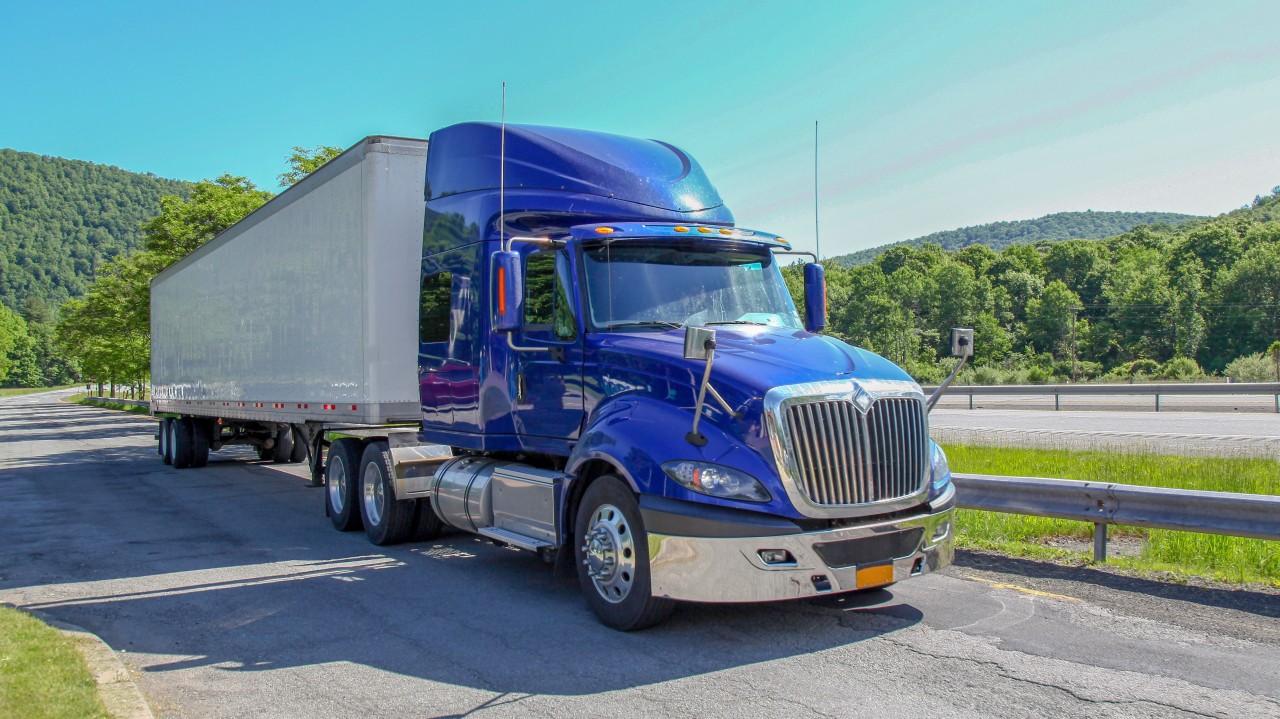
Starting a trucking, delivery, passenger transportation, or commercial vehicle business in New York requires more than registering a company and putting a vehicle on the road. New entrants must understand how federal and state requirements work together, especially when operating commercial motor vehicles in or through one of the most heavily regulated transportation markets in the country.
FMCSA.com has an office in New York and works with carriers, owner-operators, and commercial vehicle businesses that need help navigating USDOT registration, MCS-150 filings, operating authority, compliance updates, and ongoing FMCSA requirements.
What Is a New Entrant?
A new entrant is generally a motor carrier that recently registered with FMCSA and is beginning operations subject to federal motor carrier safety rules. FMCSA’s New Entrant Safety Assurance Program monitors new carriers during their first 18 months of operation, including safety performance, roadside inspection history, recordkeeping, and preparation for the required safety audit.
FMCSA expects new entrants to operate safely, maintain up-to-date records, conduct periodic inspections, maintain commercial motor vehicles, and pass the safety audit.
USDOT Numbers in New York
A USDOT number is a core identifier used by regulators to track a carrier’s safety record, registration information, inspections, crashes, and compliance history. NYSDOT states that businesses can receive a USDOT number immediately by registering online with FMCSA’s Unified Registration System, and NYSDOT no longer processes applications for new USDOT numbers.
New York is also a state where commercial vehicle operators need to be especially careful with intrastate requirements. NYC Business guidance states that in New York State, businesses operating large commercial vehicles over 10,000 pounds need USDOT fleet numbers, while vehicles used only for personal purposes do not.
Federal vs. State Compliance
New York carriers should understand the difference between interstate and intrastate operations.
Interstate operations generally involve transportation across state lines or transportation that is part of an interstate movement. Intrastate operations occur only within New York. However, even intrastate operations can still trigger USDOT, safety, insurance, vehicle registration, inspection, and state-level requirements.
For-hire interstate carriers may also need operating authority in addition to a USDOT number, unless an exemption applies. Federal regulations state that before a motor carrier of property or passengers begins interstate operations, it must register with FMCSA and receive a USDOT number, and for-hire motor carriers must generally obtain operating authority unless exempt.
Back-to-Basics Compliance Checklist for New York Carriers
New York commercial vehicle businesses should review the following:
- USDOT number registration
- MCS-150 filing accuracy
- Biennial update schedule
- Operating authority, if applicable
- Insurance filings, if applicable
- Driver qualification files
- Drug and alcohol testing requirements, if CDL drivers are used
- Clearinghouse registration and queries
- Vehicle inspection, repair, and maintenance records
- Accident register and safety documentation
- Hours-of-service compliance
- ELD requirements, if applicable
- Vehicle markings
- Safety audit preparation
Common New Entrant Mistakes
Many new carriers make avoidable mistakes early in the process. These include choosing the wrong operation classification, misunderstanding whether MC authority is required, failing to maintain driver files, missing MCS-150 updates, overlooking drug and alcohol testing obligations, or assuming that registration alone means the company is ready to operate.
New York adds another layer of complexity because commercial vehicle operators must also consider state and local enforcement, congestion, tolling, parking, vehicle restrictions, inspections, and urban operating conditions.
Federal Commercial Vehicle Compliance Requirements That Apply Across States
While each state may have its own commercial vehicle registration, permitting, insurance, and enforcement requirements, every DOT holder operating commercial vehicles should understand that federal compliance does not stop after receiving a USDOT number.
For many carriers, the most common mistake is treating DOT registration as a one-time filing. In reality, USDOT registration is the beginning of an ongoing compliance lifecycle. Carriers must keep company information current, monitor safety records, complete recurring filings, maintain driver and vehicle documentation, comply with drug and alcohol testing rules where applicable, and stay aware of changing FMCSA requirements.
Whether a carrier operates in New York, California, Arizona, Texas, Florida, or across multiple states, the federal compliance framework must be actively managed.
Core Federal Filings: MCS-150, DOT Activation, UCR, and Related Registration Requirements
Every DOT holder should understand the importance of maintaining accurate federal registration information.
The MCS-150 is the form used to register and update a motor carrier’s USDOT profile with FMCSA. This filing contains key company information, including legal name, DBA, physical address, mailing address, contact information, mileage, number of vehicles, number of drivers, cargo classifications, operation type, and whether the company operates interstate or intrastate.
Carriers are generally required to update their MCS-150 at least once every two years through the biennial update process. However, carriers should not wait for their biennial deadline if important information changes. Updates may be needed when the business changes its address, phone number, legal name, ownership, operating status, vehicle count, driver count, mileage, cargo type, or type of operation.
For new entrants, DOT activation and registration accuracy are especially important. Mistakes made during the initial DOT registration process can create downstream problems with operating authority, insurance filings, state registration, safety audits, and public SAFER records.
Carriers operating in interstate commerce may also need to complete Unified Carrier Registration, commonly known as UCR. UCR is an annual registration requirement that applies to many interstate motor carriers, brokers, freight forwarders, and leasing companies. Missing UCR registration can create enforcement risk, delays, and avoidable compliance issues.
Depending on the carrier’s operation, additional federal filings may also be required, including operating authority, BOC-3 process agent filing, insurance filings, hazardous materials registration, and other FMCSA-related updates.
The key point is simple: federal registration is not just about getting a DOT number. It is about keeping the entire company profile accurate and aligned with the actual business operation.
Training, Driver Management, and Reasonable Suspicion Requirements
Federal compliance also extends to internal company training, driver oversight, and safety management. Motor carriers that employ CDL drivers subject to DOT drug and alcohol testing rules must ensure that supervisors who manage those drivers receive reasonable suspicion training. This training is intended to help supervisors identify signs of possible drug or alcohol misuse and understand when reasonable suspicion testing may be required.
Reasonable suspicion training is not merely a best practice. It is a key part of maintaining a compliant DOT drug and alcohol testing program. A carrier that has CDL drivers but lacks trained supervisors may be exposed during an audit, investigation, or post-incident review.
Beyond reasonable suspicion training, carriers must also maintain proper driver qualification controls. This may include:
- Driver qualification files
- Motor vehicle record reviews
- CDL verification, where applicable
- Medical examiner certificate tracking
- Road test documentation or equivalent records
- Annual driver reviews
- Accident registers
- Hours-of-service compliance
- ELD records, if applicable
- Policies for unsafe driving, violations, and corrective action
New entrants should be especially careful because FMCSA reviews safety management controls during the new entrant period. A carrier may have vehicles on the road and active customers, but still fail a safety audit if the underlying records and procedures are incomplete.
Clearinghouse, Drug & Alcohol Testing, and Return-to-Duty Compliance
For carriers with CDL drivers operating commercial motor vehicles subject to FMCSA drug and alcohol testing rules, the Drug & Alcohol Clearinghouse is one of the most important federal compliance systems.
The Clearinghouse is used to track CDL and CLP driver drug and alcohol program violations. Employers must use the Clearinghouse to run required queries, obtain driver consent when needed, and determine whether a driver is prohibited from performing safety-sensitive functions.
Carriers should understand the difference between several related obligations:
- Clearinghouse registration: Employers must be properly registered and have the correct account access.
- Pre-employment queries: Before allowing a CDL driver to perform safety-sensitive work, employers generally must complete the required Clearinghouse query process.
- Annual queries: Employers must conduct annual Clearinghouse queries for CDL drivers they employ.
- Driver consent: Certain query types require specific driver consent before information can be released.
- C/TPA designation: Owner-operators must generally designate a consortium/third-party administrator in the Clearinghouse.
- Drug and alcohol testing program enrollment: Carriers subject to DOT testing rules must maintain a compliant testing program, including pre-employment, random, post-accident, reasonable suspicion, return-to-duty, and follow-up testing when applicable.
- Return-to-duty process: Drivers with a prohibited status must complete the required return-to-duty process before returning to safety-sensitive functions.
This area is especially complex because it connects multiple parties, including the carrier, driver, C/TPA, medical review officer, substance abuse professional, collection sites, and testing laboratories.
Clearinghouse II has also increased the practical consequences of noncompliance by connecting prohibited Clearinghouse status to commercial driving privileges. That means a Clearinghouse problem can become both a compliance problem and an operational problem.
For carriers, the lesson is clear: drug and alcohol compliance cannot be managed casually. It requires a structured process, assigned responsibility, documentation, and recurring review.
Keeping SAFER Clean, Monitoring Violations, and Staying Current With Regulations
A motor carrier’s public-facing safety profile matters.
FMCSA’s SAFER system displays key carrier information, including USDOT status, operating classification, cargo carried, inspections, crashes, safety rating information, and out-of-service data. Customers, insurers, brokers, enforcement agencies, and business partners may use this information to evaluate a carrier.
Keeping SAFER clean starts with keeping the MCS-150 accurate. If the carrier’s legal name, address, operating status, mileage, vehicles, drivers, or cargo classifications are outdated, the public profile may not reflect the current business.
Carriers should also pay attention to:
- Roadside inspection violations
- Driver violations
- Vehicle violations
- Out-of-service orders
- Crash records
- Safety measurement trends
- Insurance status
- Operating authority status
- Registration status
- MCS-150 update history
Violations and outdated information can affect how a carrier is viewed by brokers, shippers, insurers, regulators, and potential customers. In some cases, inaccurate or stale records can also lead to enforcement contact, audit risk, or lost business opportunities.
Carriers must also stay current with regulatory changes. FMCSA rules and systems continue to evolve, including changes involving registration modernisation, Clearinghouse enforcement, identity verification, operating authority, fraud prevention, safety monitoring, and digital compliance systems.
For busy operators, this is one of the hardest parts of compliance. The rules do not remain static, and each new system update can affect account access, filing workflows, documentation, or enforcement expectations.
Why Federal DOT Compliance Requires an Ongoing Process
Federal commercial vehicle compliance is not a single filing, a single login, or a single annual reminder. It is an ongoing process that touches registration, safety, driver management, drug and alcohol testing, public records, audits, and operating authority.
A carrier may need to answer questions such as:
- Is the company’s MCS-150 current?
- Is the USDOT number active?
- Is UCR required and filed for the current year?
- Is operating authority required?
- Is BOC-3 required and on file?
- Are insurance filings active?
- Is the company properly enrolled in a DOT drug and alcohol testing program?
- Has the company completed the required Clearinghouse queries?
- Are supervisors trained for reasonable suspicion?
- Are driver qualification files complete?
- Are vehicle maintenance records audit-ready?
- Is the SAFER profile accurate?
- Are violations being reviewed and addressed?
- Are FMCSA regulatory changes being monitored?
For a new entrant or growing commercial vehicle business, this can quickly become overwhelming. Many operators are focused on dispatch, sales, payroll, drivers, insurance, vehicles, customers, and daily operations. Compliance can fall behind unless there is a system in place.
Work With FMCSA.com in New York
FMCSA.com has an office in New York and helps commercial vehicle businesses understand their federal and state compliance obligations before mistakes become costly. We help DOT holders, owner-operators, motor carriers, and commercial vehicle businesses navigate the complex federal compliance environment.
For businesses that want support, FMCSA.com can handle filings on your behalf with professional guidance from our U.S.-based compliance team. Whether you are starting a new operation, updating your USDOT information, preparing for a new entrant audit, reviewing your MCS-150, or trying to understand whether your business needs additional filings, we can help.
For businesses that prefer to move quickly through a guided process, FMCSA.com also offers self-filing support through an online portal, similar to the way many businesses approach tax return preparation: structured intake, clear prompts, professional support when needed, and a process designed to reduce guesswork. Whether you are starting a new operation, updating your USDOT information, preparing for a new entrant audit, reviewing your MCS-150, or trying to understand whether your business needs additional filings, FMCSA.com can help.
Whether you need help understanding the new requirements, preparing your drivers, or managing your broader FMCSA compliance obligations, our team is here to help.
Need assistance today?
- Call (800) 500-9295 to speak with a compliance specialist directly to help you navigate your filings with confidence or
- Self-File at FMCSA.com
For more content and updates, follow us on Facebook
Frequently Asked Questions About New York Commercial Vehicle Compliance for New Entrants
A new entrant is generally a motor carrier that has recently registered with the Federal Motor Carrier Safety Administration (FMCSA) and begun operations subject to federal safety regulations. Most new entrants participate in the FMCSA New Entrant Safety Assurance Program during their first 18 months of operation.
Yes. Registering your business is only the first step. Many commercial vehicle operators must also obtain a USDOT Number, determine whether operating authority is required, maintain safety records, and comply with both federal and New York regulations.
Many commercial vehicle businesses do. Interstate carriers generally require a USDOT Number, and certain intrastate carriers may also need one depending on their operation and New York requirements.
Interstate operations involve transporting freight or passengers across state lines or as part of interstate commerce. Intrastate operations remain within New York, although some intrastate carriers are still subject to federal safety regulations.
Not every carrier does. Many for-hire interstate carriers must obtain FMCSA operating authority, while private carriers and certain exempt operations may not. Your business model determines whether authority is required.
The program monitors new carriers during their first 18 months of operation and includes a safety audit that evaluates whether the carrier has appropriate safety management controls in place.
Auditors may review driver qualification files, vehicle maintenance records, hours-of-service compliance, accident records, drug and alcohol testing programs, insurance, and other required safety documentation.
The MCS-150 is the Motor Carrier Identification Report used to establish and update a carrier’s USDOT registration. It must be kept current and updated at least every two years, or sooner if important business information changes.
An overdue or inaccurate MCS-150 can lead to compliance issues, an inactive USDOT Number, and problems with inspections, audits, brokers, or insurance verification.
UCR is an annual registration program that applies to many interstate motor carriers, brokers, freight forwarders, and leasing companies. It is separate from obtaining a USDOT Number.
Many carriers applying for interstate operating authority must file a BOC-3 to designate process agents in each state where required.
If your company employs CDL drivers who perform safety-sensitive duties under FMCSA regulations, you generally must maintain a compliant DOT drug and alcohol testing program.
The Clearinghouse is a federal database that tracks DOT drug and alcohol violations. Employers must complete required Clearinghouse queries before hiring CDL drivers and perform annual queries for current drivers.
Reasonable suspicion training teaches supervisors how to recognize signs of possible drug or alcohol misuse and determine when DOT regulations permit reasonable suspicion testing.
Yes. If an owner, dispatcher, or manager supervises CDL drivers and may need to order reasonable suspicion testing, that individual should receive the required training.
Most carriers should maintain driver qualification files, vehicle maintenance records, inspection reports, accident registers, hours-of-service records, insurance documentation, and required FMCSA registrations.
Common mistakes include selecting the wrong operation type, missing MCS-150 updates, misunderstanding operating authority requirements, overlooking drug and alcohol testing obligations, and failing to prepare for the new entrant safety audit.
Your SAFER profile contains public information about your company, including registration status, inspections, crashes, and operating classifications. Brokers, shippers, insurers, and enforcement agencies often review this information.
Keeping your MCS-150 current, maintaining active registrations, updating company information promptly, and addressing compliance issues all help ensure your SAFER profile accurately reflects your operation.
Yes. In addition to federal requirements, carriers operating in New York may also need to comply with state registration rules, vehicle restrictions, inspections, toll requirements, and local operating regulations.
Compliance should be reviewed throughout the year, not only when filings become due. Regular reviews help ensure registrations, records, and safety programs remain current.
An inactive USDOT Number may prevent a carrier from legally operating where federal registration is required and can delay business operations until the issue is corrected.
DOT compliance extends beyond initial registration. Carriers must continue updating registrations, maintaining records, monitoring safety performance, and meeting changing FMCSA requirements throughout the life of the business.
Building strong compliance practices from the beginning helps reduce audit risks and supports smoother operations. Maintaining accurate registrations, organized records, and consistent safety procedures can also strengthen relationships with brokers, insurers, and customers.
If you’re starting a trucking or commercial vehicle business in New York, or have questions about USDOT registration, MCS-150 filings, operating authority, UCR, Clearinghouse requirements, or preparing for a new entrant safety audit, speaking with a DOT compliance professional can help ensure your business starts on the right track. FMCSA.com assists carriers with federal compliance requirements while helping them understand how those obligations fit alongside New York’s commercial vehicle regulations.